The Man Behind the Badge
Sunday, January 11, 2026
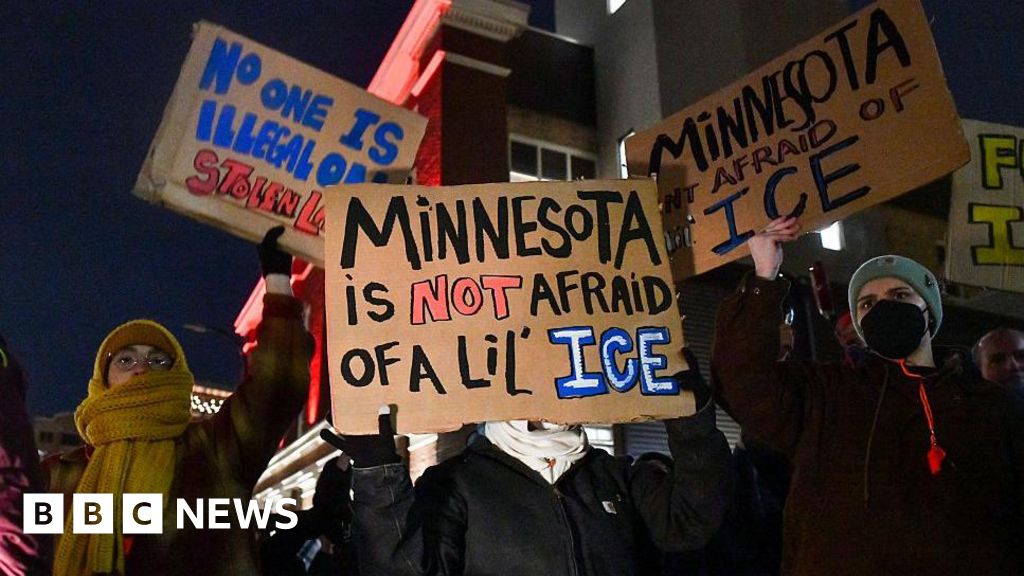
As protests erupt and politicians rush to judgment over the fatal Minneapolis shooting, ICE agent Jonathan Ross—a veteran officer previously injured in the line of duty—finds himself at the center of a binary narrative that leaves no room for the complexity of split-second decisions or the humanity of those who make them.
The headlines write themselves quickly these days. Hero or villain. Justified or murder. In the heated aftermath of the fatal shooting of Renee Nicole Good by ICE agent Jonathan Ross in Minneapolis, the national conversation has crystallized into opposing camps with startling speed.
But lost in the binary is a question we might be afraid to ask: What about the man who pulled the trigger?
Jonathan Ross is a veteran ICE agent who once before faced a moment of physical danger that most of us will never experience. He was struck by a car in the line of duty—an incident that left him injured and likely marked by the kind of trauma that doesn't announce itself in press conferences or policy debates.
Now, standing in front of Good's vehicle on a Minneapolis street, Ross had seconds—perhaps less—to make a decision that would define the rest of his life. The newly released body camera footage shows a chaotic scene: voices escalating, a vehicle reversing and then lurching forward, the camera jerking skyward as shots ring out.
President Trump, Vice President Vance, and Homeland Security Secretary Kristi Noem have defended Ross, calling it self-defense. Minneapolis Mayor Jacob Frey has called that narrative "garbage." Within hours of the shooting, both sides had their story. Both sides knew what happened. Both sides were certain.
But what does certainty cost us?
Former federal prosecutor Dan Gelber called the federal lockdown of evidence "what a cover-up looks like." Eric Nelson, one of Derek Chauvin's defense attorneys, warned that snap judgments from officials "undermine public trust." Politicians on both sides rushed to conclusions before investigators could even secure the scene.
In this rush, Ross himself has become invisible—reduced to a character in competing narratives rather than a human being who must now live with an impossible moment. We don't know what he was thinking. We don't know what his previous injury taught him about the danger of vehicles. We don't know how his training shaped his response or whether trauma played a role in his perception of threat.
These aren't questions designed to excuse or condemn. They're questions designed to see.
Because here's what Christians understand about the human condition: we are all more complicated than our worst moments. We are all shaped by wounds we didn't choose. We are all capable of making terrible mistakes under pressure, and we are all in need of a justice system that seeks truth rather than tribal victory.
Good's wife described her as someone from whom "kindness radiated." She was a mother of three, including a six-year-old son, raising him to believe that everyone deserves compassion regardless of where they come from. By all accounts, she was trying to support her neighbors when she died.
Both things are true: Good's life had immeasurable value, and Ross's humanity cannot be erased by political convenience.
The federal government's decision to exclude local investigators from accessing evidence has created a crisis of legitimacy before any findings are released. "It's absurd to think the state can't investigate a homicide within the state," said former federal prosecutor Tom Gelber. When the investigation's integrity is compromised by the appearance of political protection, everyone loses—including Ross, who may never receive the fair hearing that could provide clarity about what actually happened.
The Christian tradition teaches us to hold space for complexity, to resist the temptation of false certainty, to remember that behind every headline is a person made in the image of God. It teaches us that justice is not the same as partisan vindication, and that truth-seeking requires humility.
Ross will carry this moment for the rest of his life. So will Good's family. So, in different ways, will the community torn apart by this tragedy.
The question before us isn't just about what happened in those chaotic seconds on a Minneapolis street. It's about whether we can resist the impulse to flatten human beings into political symbols. It's about whether we still believe that everyone—including ICE agents, including protesters, including victims—deserves to be seen in their full humanity before judgment is rendered.
In a culture that demands we choose sides immediately, perhaps the most countercultural thing we can do is refuse to make Jonathan Ross invisible. Not to excuse him, not to canonize him, but to remember that he is a person—one who made a decision in seconds that the rest of us will debate for months, and one who will have to live with that decision long after the protests end and the politicians move on to the next crisis.
That kind of visibility—the kind that acknowledges complexity and resists certainty—might be the first step toward the justice that everyone involved deserves.