A Soldier's Wound Becomes the State's Symbol
Wednesday, February 25, 2026
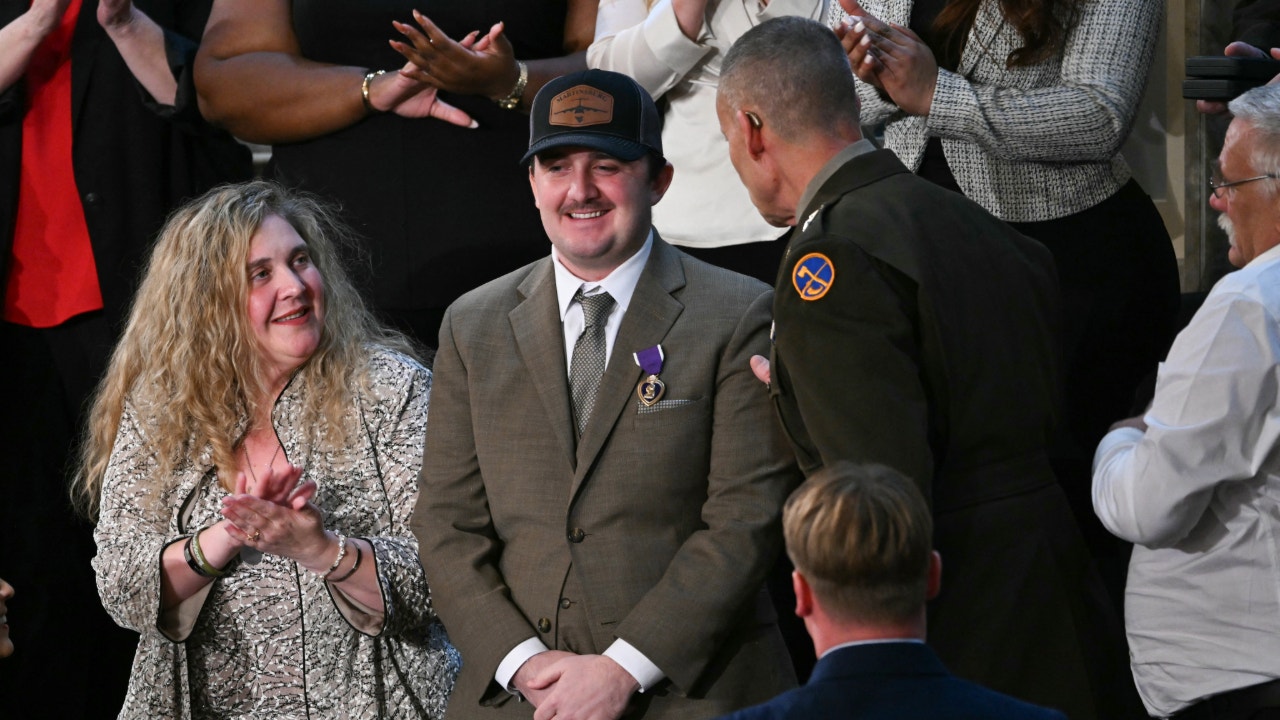
During the State of the Union, President Trump awarded the Purple Heart to a National Guard member shot near the White House, invoking divine intervention in his recovery. The ceremony reveals how civic rituals transform individual suffering into public spectacle, raising questions about who benefits when a wounded body becomes political witness.
When Staff Sgt. Andrew Wolfe received the Purple Heart during the State of the Union, cameras captured his mother burying her head in his chest as the president spoke of his "miraculous recovery" achieved "with God's help." The applause was bipartisan. The moment was powerful. But something unsettling lingers beneath the pageantry.
Wolfe and Spc. Sarah Beckstrom, who died from her wounds, were ambushed while patrolling Washington as part of an executive order deployment. Their service was real. Their sacrifice undeniable. Yet in the ritual of state honor, their bodies became something else—evidence in a larger argument about immigration policy, since the alleged shooter entered as an Afghan refugee.
The ceremony collapsed multiple narratives into one: the wounded soldier, divine healing, parental faith, national security, and political vindication. Wolfe's recovery was presented not just as medical but "miraculous," his survival a validation of something beyond his own endurance.
This is where grief deserves our pause. When suffering is immediately enlisted into meaning-making—whether political or theological—we risk treating wounded bodies as instruments rather than persons. The Christian tradition knows the danger here: even Christ's resurrection was not performed for Pilate's benefit. There is a difference between honoring sacrifice and conscripting it.
True respect might mean letting Wolfe's recovery remain his own, letting Beckstrom's death rest in sorrow rather than symbolism, and resisting the reflex to transform every wound into a lesson we were already determined to learn.