They're Betting on the Second Coming
Monday, March 30, 2026
)
Firstpost · https://www.firstpost.com/explainers/jesus-return-second-coming-polymarket-wager-cryptobets-2025-ws-e-13876973.html
42% of Gen Z investors hold crypto. 11% have a retirement account. Some are literally wagering on whether Jesus returns before 2026 ends.
What's happening
A World Economic Forum report identifies "financial nihilism" as the defining economic posture of Gen Z: the belief that the system no longer rewards prudence. Forty-two percent of Gen Z investors hold cryptocurrency, nearly four times the 11 percent who hold a retirement account. The generation carries an average personal debt of $94,101. Forty-six percent have already withdrawn from retirement savings, primarily to pay down existing debt.
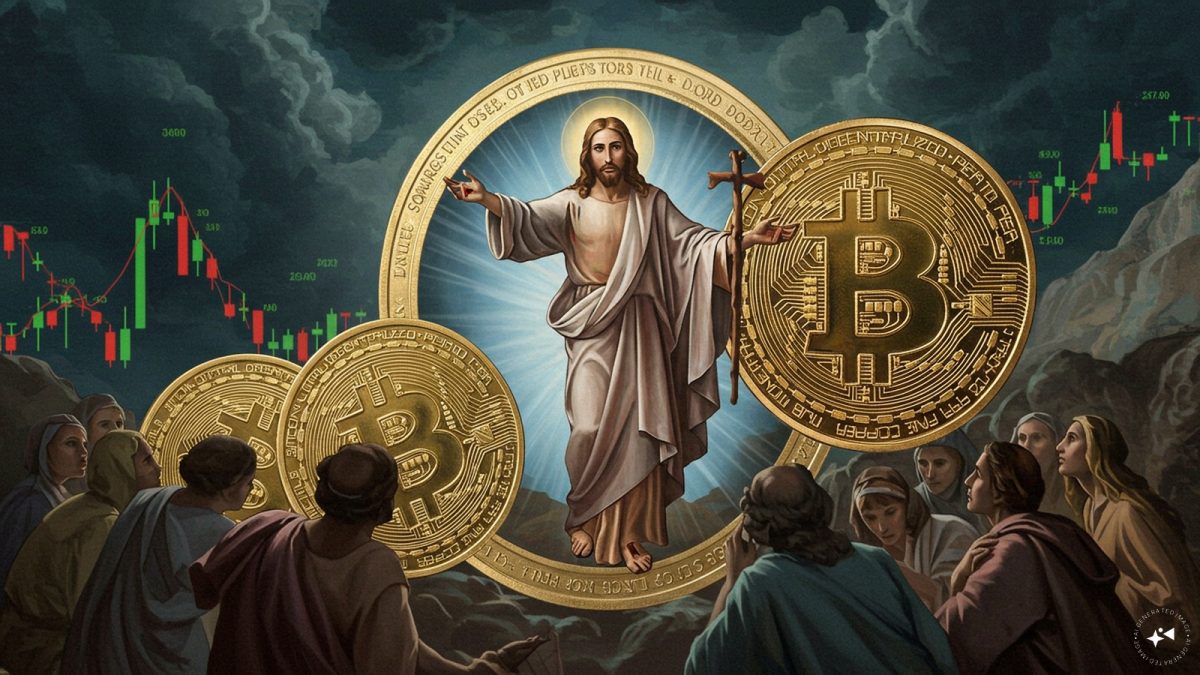
Northwestern Mutual's chief field officer reported that young people are "literally" wagering on "whether Jesus is going to return before the end of 2026" rather than investing in traditional financial instruments. University of Chicago research shows that as perceived probability of homeownership falls, people consume more and take riskier bets.
The "great wealth transfer" narrative offers little comfort: the wealthiest 10% of households will receive 56% of all intergenerational transfers. Remove the top 10%, and the median inheritance for everyone else approaches zero.
What the text says
Haggai 1:5-65Now therefore this is what Yahweh of Armies says: Consider your ways.6You have sown much, and bring in little. You eat, but you don't have enough. You drink, but you aren't filled with drink. You clothe yourselves, but no one is warm, and he who earns wages earns wages to put them into a bag with holes in it."
Haggai is not preaching about laziness. He is describing a broken economy. The people work, sow, eat, drink, earn wages. The problem is not effort. The problem is that effort produces nothing durable. The wages go into a bag with holes.
The prophet's audience had returned from exile in Babylon to rebuild their lives in a devastated land. They were doing everything right by conventional measures: planting, building, laboring. The economy simply was not converting their work into security. Haggai's diagnosis is structural, not moral. Something in the system itself is failing to reward the labor put into it.
The parallel to financial nihilism is not metaphorical. When 42% of a generation holds crypto instead of retirement accounts, they are not displaying ignorance of compound interest. They are responding to an economy that feels, functionally, like a bag with holes: you earn wages and watch them disappear into rent, debt service, and insurance premiums that climb faster than salaries.
Haggai's answer is not "try harder." His answer is to rebuild the temple: to restore the foundation that gives work its meaning. The question he leaves is what that foundation looks like now.
The reflection
The financial industry calls it irrational. Scripture calls it a symptom. When young people wager on the apocalypse because homeownership feels less plausible than the Second Coming, the problem is not their theology.
The problem is an economy that has made eschatology feel more realistic than a mortgage. Haggai saw the same thing 2,500 years ago: a generation doing everything right in a system that returned nothing. He did not lecture them about fiscal responsibility. He told them the foundation was missing. Nobody who reads the data can say he was wrong.