The Unexpected Gift of a Failed Spacecraft: Suni Williams' 286-Day Farewell
Friday, January 23, 2026
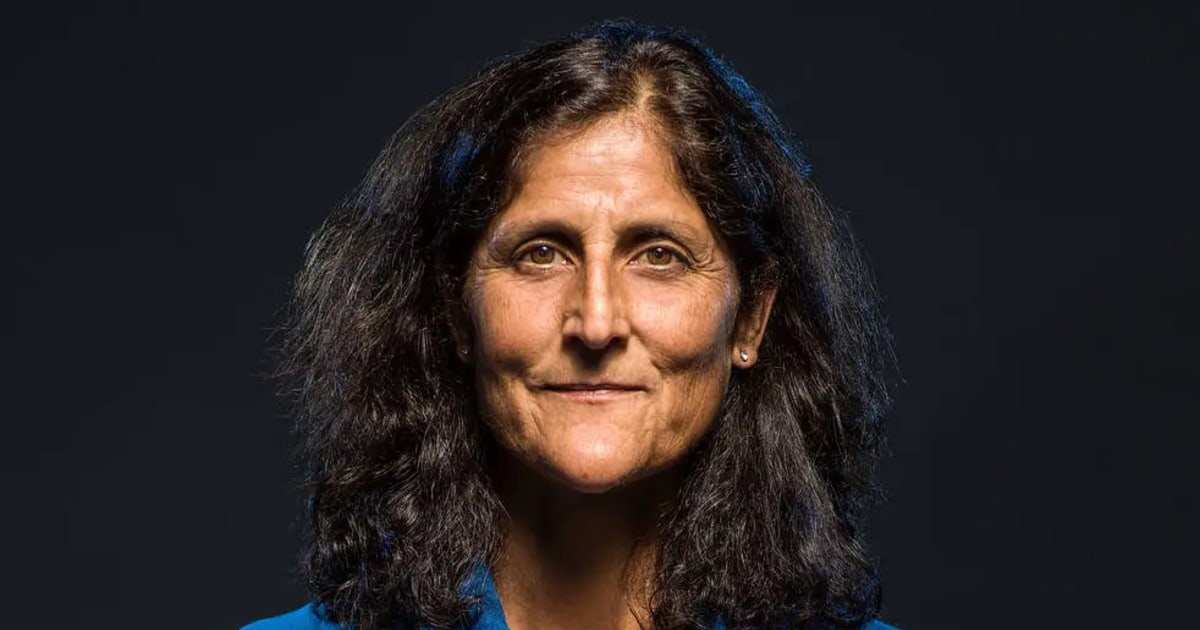
When Boeing's Starliner malfunctioned, NASA astronaut Suni Williams' weeklong mission stretched to nine months—but what looked like a crisis may have been the perfect ending to a 27-year career, giving her unhurried time to say goodbye to the place she loved most.
# The Unexpected Gift of a Failed Spacecraft: Suni Williams' 286-Day Farewell
When NASA astronaut Suni Williams launched aboard Boeing's Starliner in June 2024 for what was supposed to be a one-week test mission, no one could have predicted that a spacecraft malfunction would strand her aboard the International Space Station for nine months. The news coverage framed it as a problem, a failure, even a crisis. But as Williams retired in December 2025 after 27 years with NASA, a different story emerges—one about providence disguised as mechanical failure.
"Anyone who knows me knows that space is my absolute favorite place to be," Williams said in her retirement statement. For someone who logged 608 days in space—the second-most of any NASA astronaut—those unplanned extra months weren't imprisonment. They were something else entirely.
Consider what those 286 days gave her: time to become commander of the space station for Expedition 72, leading one final mission. Time to complete two more spacewalks, bringing her total to nine and cementing her record as the woman with the most spacewalk time in history. Time to watch Earth turn beneath her without the pressure of a ticking clock, to witness both its fragility and beauty from the only vantage point that reveals both at once.
The contrast is striking. Down on Earth, 2024 and early 2025 brought the usual chaos—political divisions, cultural battles, the relentless noise of a world that never stops shouting. Up there, 250 miles above it all, Williams had something increasingly rare: uninterrupted time to finish well, to say a proper goodbye to the work that defined her.
"The plan went way off for what we had planned, but because we're in human spaceflight, we prepare for any number of contingencies," fellow astronaut Butch Wilmore, who shared the extended mission, reflected after their March 2025 return. "This is a curvy road. You never know where it's going to go."
That perspective—the ability to see detours not as disasters but as different paths—speaks to something deeper than career flexibility. It speaks to trust.
NASA Administrator Jared Isaacman praised Williams as "a trailblazer in human spaceflight, shaping the future of exploration through her leadership aboard the space station." But perhaps her final contribution wasn't just the technical work or the records. Perhaps it was modeling how to receive the unexpected without bitterness, how to find grace in disrupted plans.
Williams' career included firsts and records: the first person to run a marathon in space, multiple spacewalking achievements, command positions, over 4,000 flight hours in 40 different aircraft types. She served in underwater habitats, trained in Russia, and helped establish helicopter training platforms for future Moon missions. It was a career of constant motion, constant achievement.
The Starliner malfunction forced something different: stillness. Not the stillness of inactivity—Williams worked constantly during those nine months—but the stillness of not rushing to the next thing, of being exactly where you are.
When Boeing's capsule returned to Earth empty in September 2024, and NASA arranged for a SpaceX Dragon to eventually bring Williams and Wilmore home, the story was told as problem-solving, as backup plans activated. And it was. But it was also something else: a gift of time that couldn't have been scheduled, approved, or planned.
We live in a world that treats every delay as a failure, every detour as a disaster. We optimize, we schedule, we plan down to the minute. But Williams' story suggests an older wisdom: sometimes the thing that looks like it's gone wrong is the thing that's gone exactly right.
"I am super excited for NASA and its partner agencies as we take these next steps," Williams said, "and I can't wait to watch the agency make history." Note that word: watch. Not lead, not participate, but watch—the work of someone who has made peace with her time being complete.
The International Space Station orbits Earth every 90 minutes. During her extended stay, Williams circled the planet thousands of times, each orbit a reminder that endings and beginnings are not opposites but parts of the same motion. The mechanical failure that extended her mission gave her what a planned retirement never could: a proper goodbye to the laboratory where she could see the whole world at once, fragile and beautiful, still turning.
Sometimes what looks like being stuck is actually being held. Sometimes what looks like a malfunction is actually a provision. And sometimes the greatest gift isn't getting what we planned, but getting what we needed in a package we didn't expect.
Williams splashed down in the ocean off Florida in March 2025 and retired nine months later. She left space with more time there than almost any American in history. But perhaps more importantly, she left it well—not rushed, not robbed, but ready. And that may be the real story: not that a spacecraft failed, but that even failure can be redeemed into something like grace.