Greenland's Future Decided in Rooms It Doesn't Enter: The Architecture of Dispensability
Friday, January 23, 2026
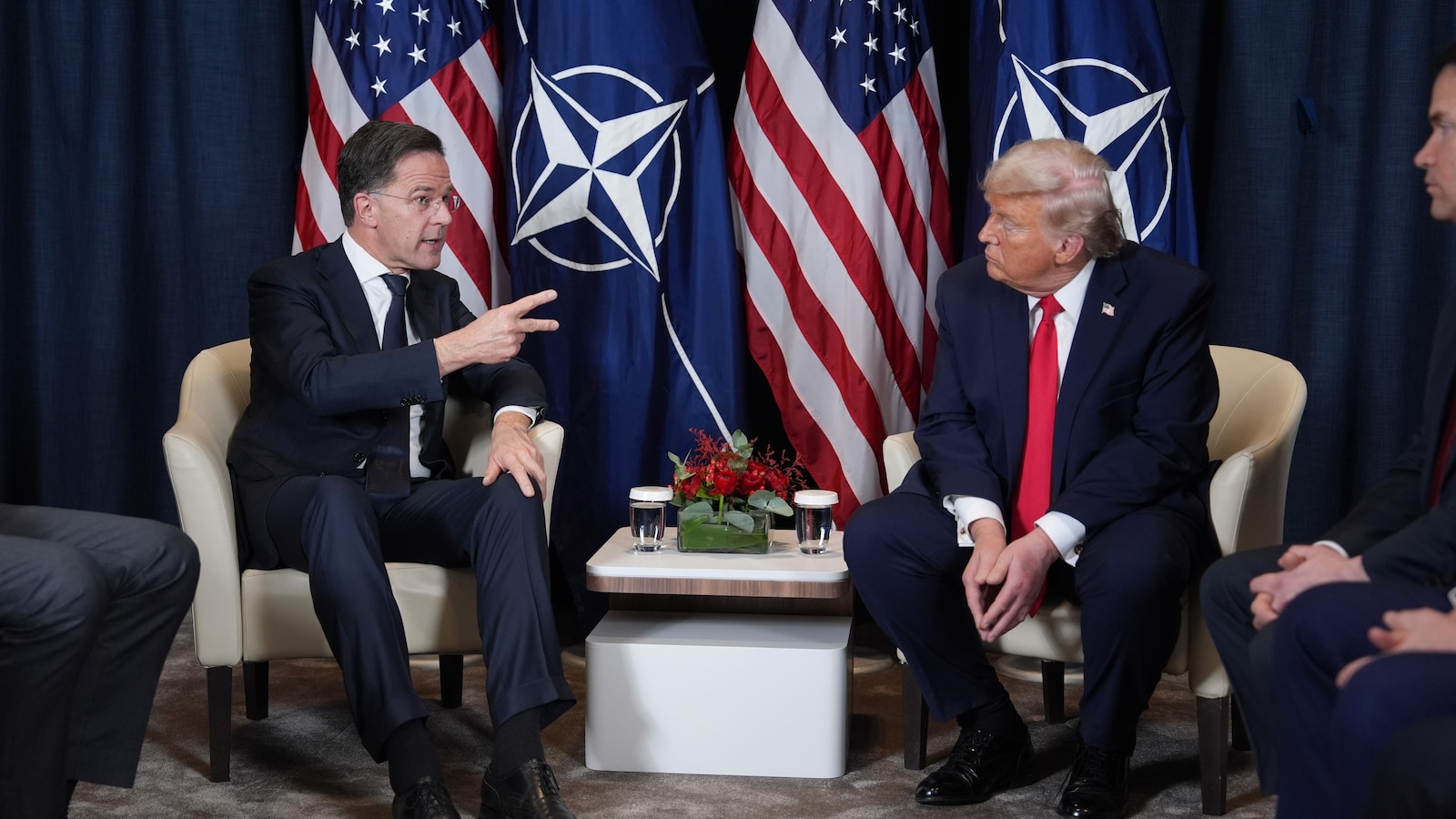
President Trump's reversal on Greenland tariffs reveals less about diplomatic success than about a global system where entire territories exist primarily as strategic assets—their fate determined by NATO expansion logic, Arctic sea lane control, and rare earth competition, regardless of who sits in the Oval Office.
# Greenland's Future Decided in Rooms It Doesn't Enter: The Architecture of Dispensability
When President Trump announced a "framework of a future deal" with NATO Secretary General Mark Rutte over Greenland's Arctic security, markets rallied and commentators praised diplomatic skill. The threat of tariffs against European allies evaporated. Crisis averted.
But look more closely at what actually changed—and what didn't.
According to European officials briefed on the talks, the framework includes provisions for US missile installations in Greenland, American mining rights designed to exclude Chinese interests, and an expanded NATO presence. These weren't concessions Trump extracted through brinkmanship. They're the operational requirements of a system that was already in motion, a system that views Greenland primarily through the lens of what it provides to others.
## The Logic That Operates Regardless of Presidency
The breathless coverage of Rutte as the "Trump Whisperer"—the man who could charm an unpredictable president into reversing course—obscures a more uncomfortable reality. Trump didn't abandon his objectives for Greenland. He simply found a more palatable vehicle for achieving them.
The architecture of great power competition doesn't require territorial annexation when it can achieve the same ends through security frameworks. Whether Greenland flies the Danish flag or the American one matters less to strategic planners than whether its rare earth minerals stay out of Chinese hands, whether its geography accommodates missile defense systems, and whether its increasingly navigable Arctic sea lanes serve Western interests.
This is the power operating beneath the surface—not the personality of any individual leader, but the structural logic that treats certain places as buffer zones, resource deposits, and strategic assets rather than as communities with the right to determine their own futures.
## Sovereignty as a Courtesy, Not a Constraint
Danish Prime Minister Mette Frederiksen emphasized after the Davos meeting that Rutte "has no mandate to negotiate on her country's behalf" and reinforced that ceding territory is "non-negotiable." Her words carry the weight of principle. But they also reveal the uncomfortable gap between principle and practice in international relations.
NATO's Rutte acknowledged that sovereignty wasn't discussed "at all" in his meeting with Trump—framed as a diplomatic victory, a red line successfully defended. Yet the substance of the framework agreement involves decisions about military installations, resource extraction, and security architecture on Greenlandic territory. The form of sovereignty is preserved even as its content is being negotiated around, rather than with, the people most affected.
Greenland's semi-autonomous government, representing 57,000 people whose ancestors have inhabited the island for millennia, was not at the table in Davos. Their self-determination exists within boundaries defined by forces much larger than themselves: NATO's strategic calculations, the US-China rivalry over rare earth minerals critical to technology manufacturing, and the opening of Arctic shipping routes as ice recedes.
## The System That Survives Leadership Changes
For Christians seeking to understand power in our world, this moment offers a clarifying lesson. We often focus on the dramatic personalities—the unpredictable president, the skilled diplomat—and miss the systems they operate within. Trump's initial threats were destabilizing; his reversal brought relief. But both the threat and the reversal took place entirely within a framework where Greenland's primary significance is what it offers to great power competition.
This is the kind of power the prophets warned against: not the power of charismatic individuals alone, but the power of systems that treat people and places as means to others' ends. Isaiah condemned those who "add house to house and join field to field" until there is no room left for others. The modern equivalent isn't just territorial expansion—it's the logic that views entire regions as strategic assets whose value derives from how they serve external interests.
## What Lasts Beyond Strategic Calculations
The question for people of faith isn't whether NATO security arrangements make strategic sense, or whether rare earth mineral access matters to Western economies, or whether Arctic sea lanes require governance. These are genuine considerations in a complex world.
The question is whether we can see beyond the strategic logic to recognize what it renders invisible. Can we notice when entire communities become afterthoughts in negotiations about their own home? Can we identify the difference between protecting people and securing access to what they possess?
The market rally that followed Trump's reversal tells its own story. Investors breathed "a sigh of relief," not because Greenlandic self-determination had been secured, but because the framework clarified how Western interests would be maintained without the disruption of tariffs or diplomatic crisis. The system found its equilibrium. Stability was restored.
But stability for whom? And at what cost to the principle that all people—not just those in powerful nations—possess inherent dignity and the right to determine their collective future?
## Seeing What the Headlines Miss
When the news moves on from Greenland, as it inevitably will, the framework agreed upon in Davos will continue its work quietly. Missile installations will be built or expanded. Mining rights will be negotiated. NATO presence will grow. These things will happen not because any president is uniquely aggressive or any diplomat uniquely skilled, but because they follow from the strategic logic that shapes how powerful nations relate to less powerful territories.
This is what lasts beyond news cycles and personality-driven coverage—the architecture itself, the assumptions embedded in how we think about security, resources, and strategic advantage. The assumption that some places exist primarily to serve others' needs. The assumption that great power competition naturally takes precedence over local self-determination. The assumption that stability means protecting the interests of the powerful, with the consent of the affected treated as optional or secondary.
For Christians called to see the world as God sees it, these assumptions deserve scrutiny. Not because we have simple solutions to offer, but because we're called to notice who gets rendered invisible in the pursuit of strategic objectives. We're called to remember that no person, no community, no territory exists merely as a means to someone else's ends.
The deals made in Davos matter. But so does the question of who wasn't in the room—and what kind of world we're building when that absence doesn't trouble us.