https://www.cnn.com/2019/11/29/world/gallery/black-friday-shopping-2019
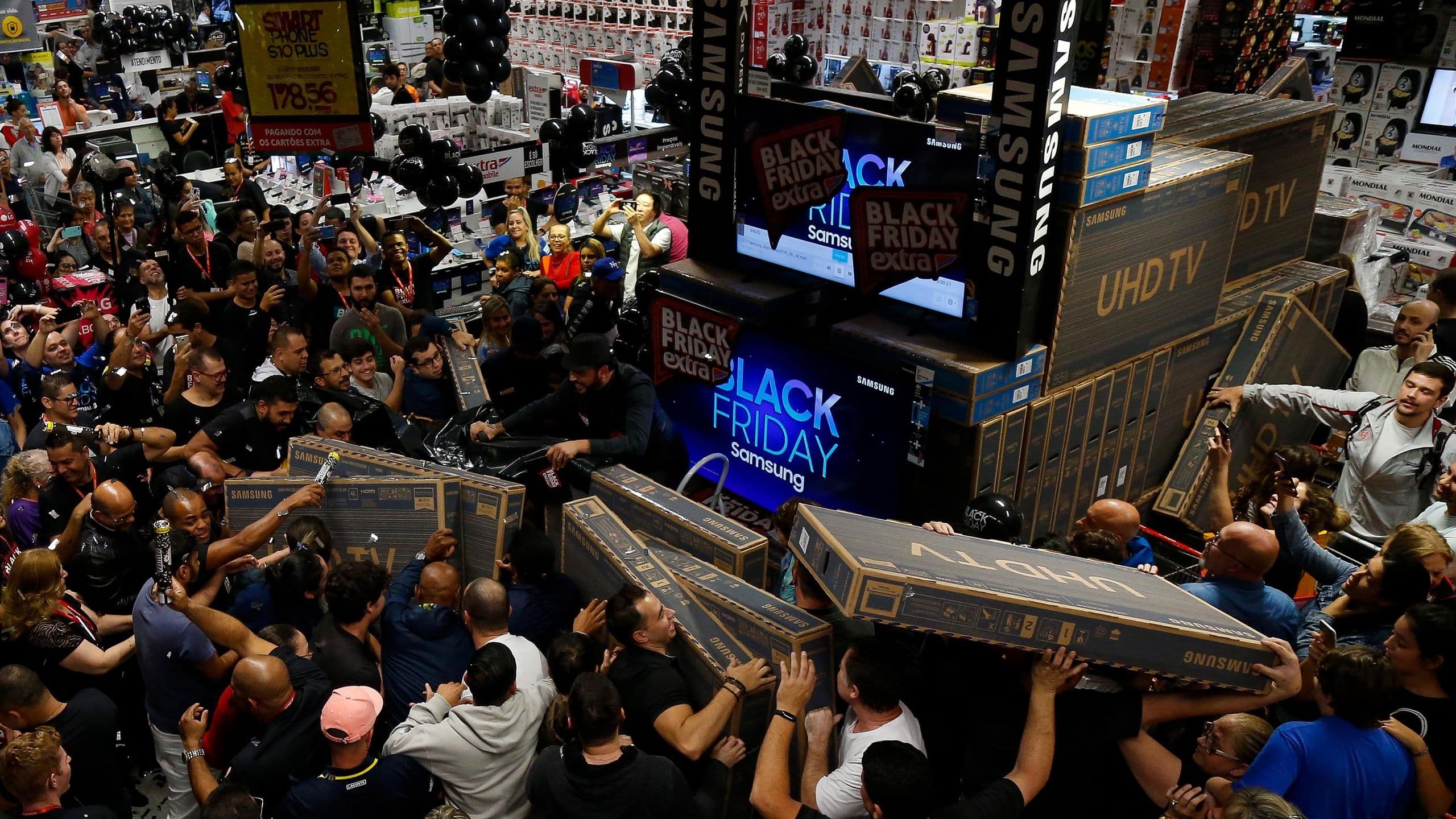
Black Friday sells the glow of the torn-open box. A king in Ecclesiastes bought everything his eyes wanted and found the glow fades on schedule.
Is there a thing of which it may be said, "Behold, this is new?" It has been long ago, in the ages which were before us.
Ecclesiastes 1:10
The best hour of owning something new usually comes before you've used it. The box is open and the thing still smells like the factory. A week later the glow is gone and your thumb is scrolling for the next one. On November 25, two days before Black Friday, NPR's Life Kit asked Eric Athas why.
Athas, a New York Times editor whose book "Saying No to New" came out in September, says something new gives us "a little shot of dopamine." The joy is real, "but science says those feelings can't last. So we have to go out and get something else." Kristina Durante, a Rutgers researcher, says dopamine drives wanting, and "a doorbuster sale is built to trigger wanting."
But the wanting can't tell you "whether you'll actually like the thing once it's sitting in your closet."
People were finding this out long before anyone measured dopamine. Ecclesiastes is written in the voice of the Teacher, a son of David ruling in Jerusalem, who grew richer than anyone there before him. He built houses, planted vineyards, and gathered silver, gold and singers to test every pleasure money could buy, then wrote down what he found.
Ecclesiastes 2:10-1110Anything my eyes desired, I did not deny myself. I refused my heart no pleasure. For my heart took delight in all my work, and this was the reward for all my labor.11Yet when I considered all the works that my hands had accomplished and what I had toiled to achieve, I found everything to be futile, a pursuit of the wind; there was nothing to be gained under the sun.
His heart really did rejoice in what he got, and none of it left him anything that lasted. His first chapter adds the sting: ask him to name one thing that is truly new, and he says it was already here, in the ages before us. Researchers can now describe the wanting. The Teacher went a step further and said the new was never as new as it looked.
So the trouble starts when the newness is the thing we're paying for.
None of this makes the sale the problem. A family buying winter coats at half price on Friday is being sensible. Skipping the mall to feel above it all is just another way to keep score. Old things also hold up better than we expect. Athas cites a study where people predicted they would enjoy a second walk through a museum exhibit less, then said afterward they enjoyed it "just as much, if not more."
Scripture keeps one kind of new that doesn't wear off, too. Lamentations was written after Babylon burned Jerusalem, by a poet with nothing left to buy:
Lamentations 3:22-2322Because of the loving devotion of the LORD we are not consumed, for His mercies never fail.23They are new every morning; great is Your faithfulness!
The poet means that God's faithful kindness keeps showing up fresh each morning after everything else is gone, and nobody sells it. Athas names what the chase really costs: it's "hard to be grateful for what you have if you're always on the lookout for something else." When the glow from Friday's box fades, as the Teacher says it will, the choice is between hunting for the next box and noticing what was already new this morning.
Sources
Buying new things feels wonderful. It can also be a trap. Here's how to break the cycle
NPR
The psychology behind Black Friday: why we buy things we don't need
Rutgers University
How to make better decisions in a world designed to tempt you
Next Big Idea Club
Deloitte Black Friday-Cyber Monday survey
Deloitte
What is Black Friday?
NBC News