The Independent · https://www.independent.co.uk/voices/how-much-screen-time-tv-paediatrics-tablets-mobile-phones-sleep-bed-parenting-a8710151.html
Progressive and traditional parents who agree on almost nothing are converging on the same unease about classroom screens, and the same request: fewer of them.
You shall teach them diligently to your children, and talk of them when you sit in your house, when you walk by the way, when you lie down, and when you rise up.
Deuteronomy 6:7
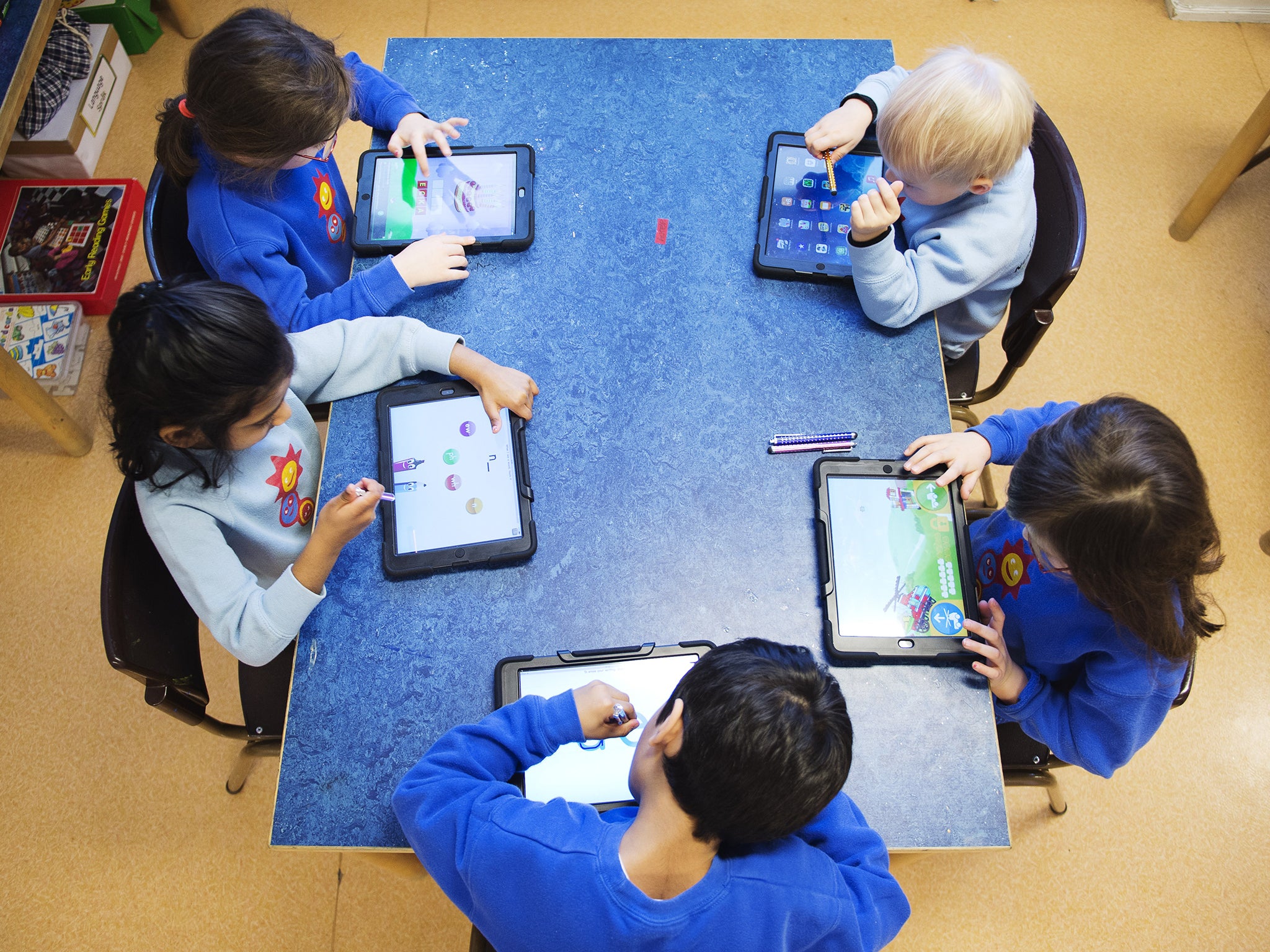
School starts again in a few weeks, and the districts are bracing. A classroom of thirty children on thirty screens does not sound like much. A few clicks. A video someone forgot to mute. Thirty faces lit from below, each one somewhere else. A read-aloud sounds different: one voice, thirty faces turned the same way.
Since 2020 the share of public schools giving every child a device has jumped from under half to nearly nine in ten, and the pushback is arriving before the buses do. In progressive Evanston, a petition to pull the screens back drew fourteen hundred signatures. The same complaint comes from parents who homeschool for church, from parents who compost and distrust the tech companies, from parents who just want a third grader reading a book. When tribes that share no politics share an alarm, it usually points to something underneath the politics.
The oldest manual for raising children is relentlessly physical. It does not say expose them to good material. It puts the teaching in the ordinary traffic of a shared day, at the table, on the road, at bedtime, at first light. Bind the words on your hand, verse 8 says. Write them on the doorframe, verse 9. Formation is something bodies do near each other over time, not a file a device opens.
Scripture treats attention itself as a moral act.
Philippians 4:8Finally, brothers, whatever things are true, whatever things are honorable, whatever things are just, whatever things are pure, whatever things are lovely, whatever things are of good report; if there is any virtue, and if there is any praise, think about these things.
A screen that scatters a child across thirty elsewheres is not a neutral pipe. It forms too. It just forms toward scatter. The parents are not reaching for paper because it is holy. Most do not want a bonfire; they want limits, and a person in the room. What they have noticed is older than their argument. A child held by someone who loves them is formed differently from a child managed by a system built to hold their eyes. Deuteronomy noticed first.