BBC · https://www.bbc.com/news/articles/c98dzgdk553o
A worn-out Norfolk farm field was simply left alone. What grew back, no one had planted, and no one is entirely sure how it arrived.
God's Kingdom is as if a man should cast seed on the earth, and should sleep and rise night and day, and the seed should spring up and grow, though he doesn't know how.
Mark 4:26-28
In 2005, a farm crew in North Norfolk harvested a last crop of oilseed rape from a five-acre field and stopped. No more plowing, no more spraying, no more sowing. From then on the only thing done to the land was a single hay cut each year. Otherwise it was left alone.
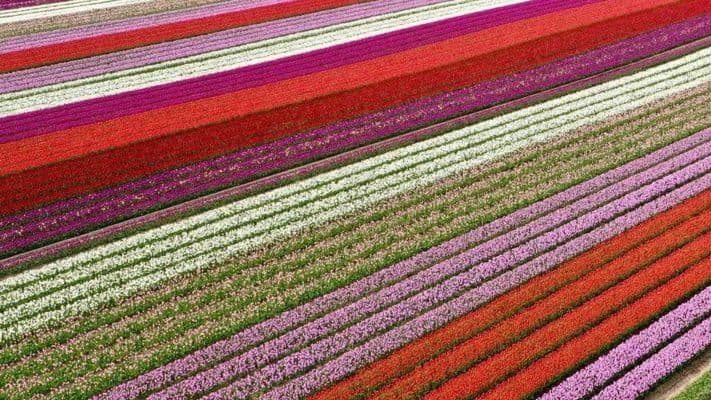
By 2022, the University College London ecologists watching the field could no longer count the orchids. What had been bare, worked farmland was now a wildflower meadow. A survey plot that held about ten kinds of plant in 2011 held nearly twenty a decade later. Southern marsh orchids stood in ground that, a few years before, had grown one crop in straight rows. When the team published its results this August, that was the headline finding: a field left to itself had doubled its own diversity and filled with flowers.
No one had planted any of it.
How the orchids arrived is the strange part, and the researchers are honest that they cannot fully say. Orchid seeds are close to dust, among the smallest in the plant world, and they carry almost no food of their own. A seed will not become a plant until it meets the right fungus threaded through the soil, and that fungus feeds the seedling underground, sometimes for years, before a single leaf ever breaks the surface. What appeared in Norfolk was the visible end of a partnership that had been working in the dark long before anyone saw a bloom. The team suspects deer tracked some seeds in on their coats. Past that, the honest account of how a plowed field became a meadow of orchids is that no one is entirely sure.
Jesus told one parable that ends in exactly that place. A man scatters seed and then goes about his life, sleeping and waking night after night, while the seed sprouts and grows and he does not know how. The farmer is not idle. He clears the ground, he scatters, and in the end he brings in the harvest. But the actual becoming, seed into blade into full grain, happens without him and beyond him. He supplies the work. He does not supply the life.
The oldest farming law in the Bible built a whole rhythm around that fact. Every seventh year, Israel was to stop:
Leviticus 25:4-54but in the seventh year there shall be a Sabbath of solemn rest for the land, a Sabbath to Yahweh. You shall not sow your field or prune your vineyard.5What grows of itself in your harvest you shall not reap, and the grapes of your undressed vine you shall not gather. It shall be a year of solemn rest for the land.
It was not a soil-science program. The reason the text gives is ownership. "The land is mine," God says a few verses on; the people who worked it were only ever tenants (Leviticus 25:23). Resting the field was a way of saying out loud that the ground had a life of its own, one that did not belong to them and did not depend on them.
The Norfolk field kept no commandment. It was simply abandoned. Yet left alone, it did the very thing the old law took for granted the land could do: it gave back what no one had sown.
We assume that whatever we stop tending will fall apart. This field spent fifteen years suggesting the reverse, that the one thing standing between the ground and its abundance was the hand that would not stop working it.