Disney+ · https://www.disneyplus.com/browse/entity-f77a3e3d-3751-4c80-9bd5-7daf2a32c4f0
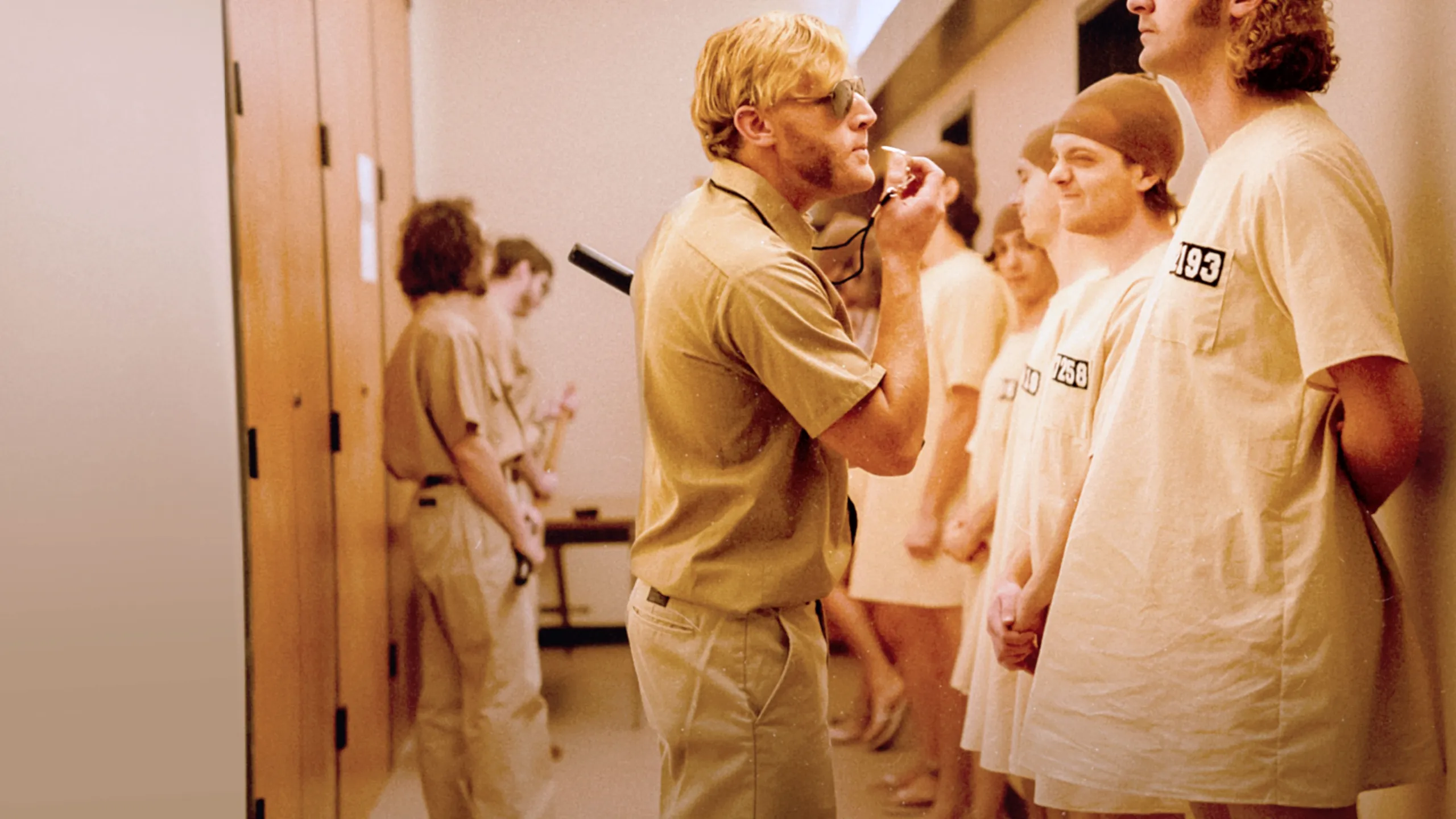
Netflix restaged the Stanford Prison Experiment to see what power does to people. Soldiers once asked John the Baptist what to do with theirs. He kept them in uniform.
Soldiers also asked him, saying, "What about us? What must we do?" He said to them, "Extort from no one by violence, neither accuse anyone wrongfully. Be content with your wages."
Luke 3:14
There are two easy answers to the question of what a uniform and a set of keys would do to you. One says the situation would take over and you'd turn cruel like anybody else. The other says, "Not me." They point in opposite directions, but both spare you a hard look at yourself.
On October 21, Netflix released The New Stanford Prison Experiment, a reality-show remake of Philip Zimbardo's 1971 study. Its lesson, as Arthur Brooks put it in The Free Press, was that "ordinary, healthy people can become cruel, abusive, and authoritarian" when a situation hands them power over others. The original has been heavily criticized and the remake is television, so neither proves much. The people in it are real, though. Chet Hudson, an oil-rig supervisor from Pelahatchie, Mississippi, compared guarding to "breaking horses" and sent two inmates to 23-hour lockdown. When the roles were swapped, he lasted one day behind the bars and quit. One prisoner, a man who had served real time, felt the place pulling him back toward who he used to be. "I don't want to be that guy any more," he said.
Luke tells of people asking that kind of question at the Jordan River. John the Baptist was calling crowds to turn their lives around, and each group wanted to know what turning would mean for them. Tax collectors, who worked for Rome and were known for skimming, asked too.
Luke 3:12-1312Tax collectors also came to be baptized, and they said to him, "Teacher, what must we do?"13He said to them, "Collect no more than that which is appointed to you."
Then soldiers asked for themselves. These were armed men in an occupied country, with every chance to shake people down. John leaves them in the job and puts limits on their hands: no squeezing people with force, no false charges, no grabbing for more pay.
That answer turns down both easy answers at once.
Against Zimbardo, John assumes the soldier still chooses what to do on every shift. Against "Not me," he names the exact sins waiting for these men, because he expects them to be tempted. The Netflix prison had people making that choice. The man who had served real time could feel his old self coming back and said he didn't want it. And when the new guards were nearly attacked, Laura Berens, a CEO on the other shift, led two other women in to stop it.
Most of us hold some keys: a shift we run, a classroom, a teenager's phone, a reply box. John took it for granted that the role is dangerous, and he answered the harder question: what limits you'll live inside while you hold the power it gives you. For the soldiers, it meant three plain limits they could keep on any patrol. The people under your keys will know by the end of your first shift whether you've set yours.
Sources
'The New Stanford Prison Experiment' Creators Break Down Its Shocking Finale
Variety
Arthur Brooks: The Real Lesson of the Stanford Prison Experiment
The Free Press
The New Stanford Prison Experiment review: surely no one believes this insulting TV show is real?
The Guardian
'The New Stanford Prison Experiment' review: A project reimagined for TV
Los Angeles Times
The New Stanford Prison Experiment explained: How the Netflix show examines power, the US prison system and human behaviour
The Age
Meet Chet Hudson, the oil rigger and guard on Netflix's The New Stanford Prison Experiment
The Tab